How to Accept Payments for Online Courses in India (UPI + Razorpay)
UPI, Razorpay, GST, installments, failed payments and refunds — everything an Indian educator needs to collect course fees cleanly and get paid straight to the bank.
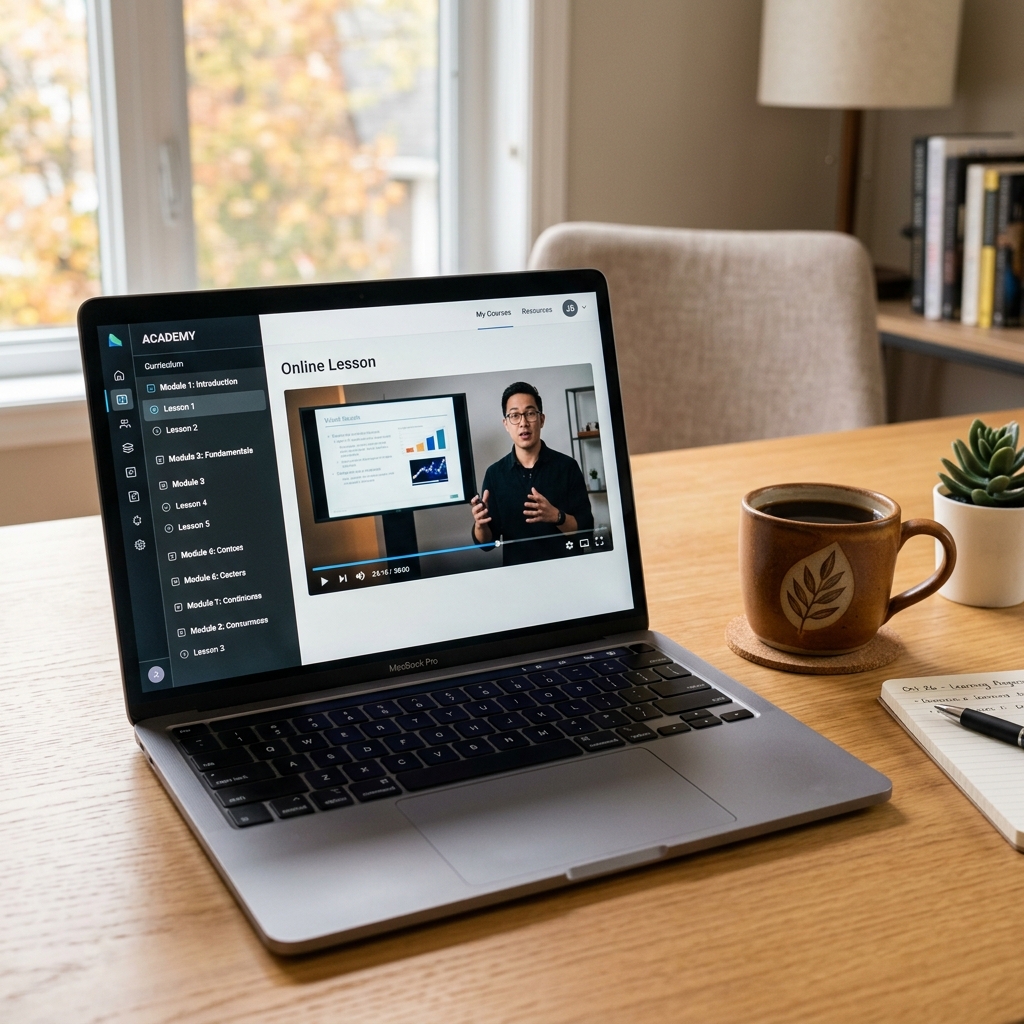
You can build the best course in your subject, write a sales page that sings, and still lose the sale in the final three seconds — at checkout. In India, payments are where good intentions go to die: a learner taps "buy," doesn't see UPI, fumbles a foreign card form, and quietly closes the tab. The money was right there. It just couldn't get to you.
This guide fixes that. It covers exactly how to collect course fees online in India — which methods your students actually use, how to set up Razorpay and UPI, how to stay clean on GST, how to offer installments, and how to stop the silent leak of failed payments. No jargon, no fluff — just a checkout that works.
Why payments are the hardest part for Indian educators
Most course tools were built for a US-first world: dollar pricing, Stripe checkout, credit cards as the default. Drop an Indian learner into that flow and friction appears everywhere. Their bank card may not work on an international processor. There's no UPI option. The price reads in dollars and feels foreign. Each tiny snag costs you a sale you'd already earned.
Get payments right and the opposite happens: the learner pays in two taps with the UPI app they use for chai, the course unlocks instantly, and the money lands in your bank a day or two later. Same course, same price — wildly different conversion. For the full launch picture, start with how to sell courses online in India.
UPI is non-negotiable
If you remember one thing, remember this: UPI is how India pays online. From street vendors to premium stores, it's the default. A checkout that doesn't offer UPI is asking the majority of your buyers to use their second-choice method — and second choice means more drop-off.
The practical upshot: pick a setup where UPI is front and centre at checkout, not buried behind cards. Every extra tap between "I want this" and "paid" is a place to lose someone.
Which payment methods to support
Cover the ways Indian learners actually pay, and stop there — extra options just clutter the page.
| Method | Why it matters | Priority |
|---|---|---|
| UPI (GPay, PhonePe, Paytm) | How most Indians pay online; instant; no card needed | Essential |
| Debit / credit cards | Still common for larger ticket sizes and EMIs | High |
| Net-banking | Trusted for higher-value purchases | Medium |
| Wallets | Convenient for some, but a small share | Optional |
| EMI / installments | Turns a ₹25,000 course into an easy monthly yes | High for premium courses |
Razorpay vs Stripe vs PayPal for India
For an India-based educator selling mostly to Indian learners, the choice is usually straightforward — but here's the honest comparison.
| Gateway | Native UPI | Best for | Watch-out |
|---|---|---|---|
| Razorpay | Yes — first-class | Indian educators selling in INR | Standard per-transaction fee (check current rate) |
| Stripe | Limited in India | Selling globally in many currencies | UPI support and India onboarding are weaker |
| PayPal | No | International one-off buyers | Poor fit for domestic Indian payments; higher friction |
Fee vs commission
Whatever gateway you pick charges a small per-transaction fee to process the money — that's unavoidable everywhere. What you *can* avoid is an extra platform commission stacked on top. See zero-commission course platforms.
Connect your own gateway — and get paid directly
The cleanest setup, and the one we'd recommend, is to connect your own Razorpay account to your course platform. When you do, the money flows straight to you: the student pays, Razorpay processes it, and the funds settle into *your* bank account — typically within a couple of working days — with no middle layer holding your earnings.
This is exactly how The Big Class storefront works: bring your own Razorpay account, switch on UPI, and you keep 100% of each sale apart from Razorpay's standard fee — the platform itself takes 0% commission. Your students pay in rupees, you get paid in rupees, and nothing sits in someone else's account first.
GST and invoicing — do it right from day one
Tax is the part educators most want to ignore and most regret ignoring. Whether you need to charge GST depends on your turnover and the nature of your sales, but once you cross the registration threshold, you generally must register, charge GST correctly, and issue compliant invoices to your students.
- Pick a platform with built-in GST invoicing so every sale generates a compliant invoice automatically — no monthly spreadsheet scramble.
- Keep your GSTIN, HSN/SAC codes and tax rates set up once, correctly, so they apply to every order.
- Give students a proper invoice they can claim — many learners (and their employers) expect one.
- For your exact obligations, talk to a CA. Tax rules change; a professional keeps you safe.
Don't bolt this on later
Retro-fixing invoices for a year of sales is painful. Set GST up before your first big launch, not after.
One-time, subscription, or installments?
How you charge shapes who can say yes. Match the model to the price and the promise.
- One-time payment — simplest, perfect for self-paced courses under ~₹5,000.
- Installments / EMI — splits a premium course (₹15,000+) into monthly chunks, turning sticker shock into an easy yes. Great for coaching and long programs.
- Subscription / membership — recurring revenue for ongoing value: a community, monthly live sessions, a question bank. Predictable income beats one-off spikes.
Many educators stack these: a one-time course, an EMI option for the premium tier, and a monthly membership for continued access. One subject, several ways to pay, more people able to buy.
Stop the silent leak: failed payments and abandoned carts
A surprising share of "lost" sales aren't lost — they failed for fixable reasons. Plug these leaks:
- Offer UPI prominently. The single biggest fix. Cards fail more often than UPI in India.
- Keep the form short. Every extra field is a reason to bail. Name, email, phone, pay — done.
- Show the price in INR. A dollar figure makes buyers hesitate and recalculate.
- Send a recovery nudge. If a payment fails, a quick WhatsApp or email with the same link rescues a chunk of those buyers — far better than a single email that gets buried.
- Confirm instantly. The course should unlock the moment payment clears, with a clear receipt. Doubt at this step kills trust.
Refunds, disputes, and trust
A clear refund policy isn't a weakness; it's a conversion tool. Indian buyers, like everyone, pay more readily when the risk feels low. State your policy plainly — say, a no-questions window for the first few days — and honour it quickly. Fast, fair refunds turn a wobble into a fan, and protect you from payment disputes that cost more than the refund itself.
Selling to international students
If some of your audience is abroad, you can still accept their payments — most Indian gateways handle international cards, and you can price in INR or offer a separate flow. Just don't let the international edge case complicate the core: optimise checkout for the Indian majority first, then add the rest.
Recurring payments for memberships and subscriptions
One-time sales are simple. Recurring revenue — a monthly membership, a subscription to your question bank, an ongoing community — is where a course business gets stable. But auto-charging in India needs a little care, because the system is built to protect buyers from surprise debits.
UPI AutoPay and card-based mandates let you charge students automatically each cycle. The catch: a mandate approves a maximum amount up front, and larger or changed charges can need fresh confirmation. Keep your monthly price within sensible mandate limits and set the cap with a little headroom, and your renewals will sail through instead of silently failing.
- Use UPI AutoPay or card mandates so renewals don't depend on a student remembering to pay.
- Set the mandate cap slightly above your price, so a small future change doesn't break every subscription at once.
- Dun gently — when a renewal fails, retry and send a friendly WhatsApp or email nudge before you cut off access.
- Make cancelling effortless. A frictionless exit is exactly what makes people comfortable subscribing in the first place.
If recurring revenue is the goal, layering a membership offer on top of your courses smooths the feast-or-famine of one-off launches into predictable monthly income — and gives your community a reason to stay subscribed.
Security and trust at the checkout
Indian buyers are rightly careful online, and a checkout is where trust is won or lost in seconds. The good news is that an established gateway does the hard part for you — PCI-compliant card handling, fraud checks, secure UPI flows. Your job is simply to look as trustworthy as you actually are, and to never get in the gateway's way.
- Show your brand, not a generic processor page — a white-label checkout on your own domain reassures buyers it's really you.
- State the price, what's included, and your refund policy right where the payment happens — no surprises.
- Send an instant receipt and access link; silence after payment breeds panic, and panic breeds refund requests.
- Never store card details yourself — let the gateway handle them. That's safer for your students and far simpler for you.
Trust isn't a trick. It's the honest sum of a recognisable brand, a clear offer, a fast confirmation and a fair refund policy — and it pays for itself in fewer abandoned carts and fewer disputes.
Your payments checklist
- Connect your own Razorpay account to your platform.
- Turn on UPI and make it the first option at checkout.
- Add cards and net-banking; add EMI on premium courses.
- Set up GST and automatic compliant invoices.
- Price in INR; keep the checkout form short.
- Wire a failed-payment recovery nudge over WhatsApp/email.
- Publish a clear, fast refund policy.
- Confirm access + receipt instantly on success.
Take UPI payments today — keep 100%
Connect your own Razorpay account on The Big Class, switch on UPI, and start collecting course fees with GST invoices and direct bank payouts. 0% platform commission.
See the storefront
Renu Rawat
Founder of thebigclass.com. Helping Indian educators and creators build profitable, independent learning businesses without losing 30% to platform fees.
About the founderFrequently asked questions
- How do I accept payments for my online course in India?
- Connect your own payment gateway — Razorpay is the default for Indian educators — to your course platform, and switch on UPI, cards and net-banking. Students pay in rupees, the course unlocks instantly, and the money settles directly into your bank account, usually within a couple of working days. On a zero-commission platform like The Big Class you keep 100% of the sale apart from the gateway's standard processing fee.
- Is UPI necessary for selling courses online?
- Practically, yes. UPI carries the overwhelming majority of online consumer payments in India, so a checkout without it asks most buyers to use their second-choice method — which means more drop-off. Make UPI the first, most prominent option at checkout.
- What is the best payment gateway for online courses in India?
- For educators selling mostly to Indian learners, Razorpay is usually the best fit because it supports UPI natively, handles Indian cards and net-banking well, and settles directly to an Indian bank. Stripe suits global multi-currency selling but has weaker India/UPI support, and PayPal is a poor fit for domestic Indian payments. Check current rates and availability before deciding.
- Do I need to charge GST on online courses in India?
- It depends on your turnover and the nature of your sales. Once you cross the GST registration threshold you generally need to register, charge GST, and issue compliant invoices. Use a platform with built-in GST invoicing so this is automatic, and confirm your specific obligations with a CA.
- Can I offer EMI or installments for my course?
- Yes, and you should for higher-ticket programs. Splitting a ₹15,000–₹25,000 course into monthly installments turns sticker shock into an easy yes and widens who can afford to enrol. Offer it alongside one-time payment, not instead of it.
- How long does it take to get the money in my bank?
- With your own Razorpay account connected, settlements typically reach your bank within a couple of working days (around T+2), depending on your gateway settings. The course access itself unlocks for the student instantly on successful payment.
- Why are my course payments failing?
- The most common causes in India are missing UPI at checkout, long or confusing forms, and dollar pricing. Lead with UPI, keep the form short, price in INR, and add a quick failed-payment recovery nudge over WhatsApp or email to win back buyers whose first attempt didn't go through.
- Can I accept payments from students outside India?
- Yes — most Indian gateways accept international cards, so overseas learners can pay too. Optimise your checkout for the Indian majority first (UPI-led, INR pricing), then layer in the international flow rather than letting it complicate the core experience.
- What's the cheapest way to accept course payments in India?
- Connect your own payment gateway (Razorpay is the common choice) to a course platform that takes 0% commission, so you pay only the gateway's standard per-transaction fee — unavoidable anywhere — and nothing extra to the platform on each sale. Avoid stacking a platform commission on top of the gateway fee, and avoid USD-priced international tools that add an exchange-rate cost for a rupee-earning creator. The cheapest setup is native UPI plus your own gateway on a zero-commission, INR-priced platform.
- Do students need an account to pay for a course?
- Not necessarily to pay, but they do need access afterward, so most platforms create a lightweight account at checkout tied to the email or phone they enter. Keep that step minimal — name, email, phone, pay — because every extra field costs you sales. The key is that access unlocks instantly on successful payment and a receipt arrives immediately, so the buyer never wonders whether it worked. A short, fast checkout with UPI converts far better than a long signup wall.
Keep reading

Zero-Commission Course Platforms: Keep 100% of Your Course Revenue
Commission is the quiet tax on every sale you make. Here's what it really costs over a year, how to spot a true zero-commission platform, and how to keep what you earn.
Read
How to Sell Courses Online in India: The Complete 2026 Guide
From a blank page to your first paying student — validating the idea, pricing it right, taking UPI payments, handling GST, and picking a platform that doesn't eat your margin.
Read
How to Choose the Best Online Course Platform in India
A clear, India-first way to choose a course platform — the six things that actually matter, an honest map of the options, and how to pick for your situation.
Read