How to Sell Courses Online in India: The Complete 2026 Guide
From a blank page to your first paying student — validating the idea, pricing it right, taking UPI payments, handling GST, and picking a platform that doesn't eat your margin.
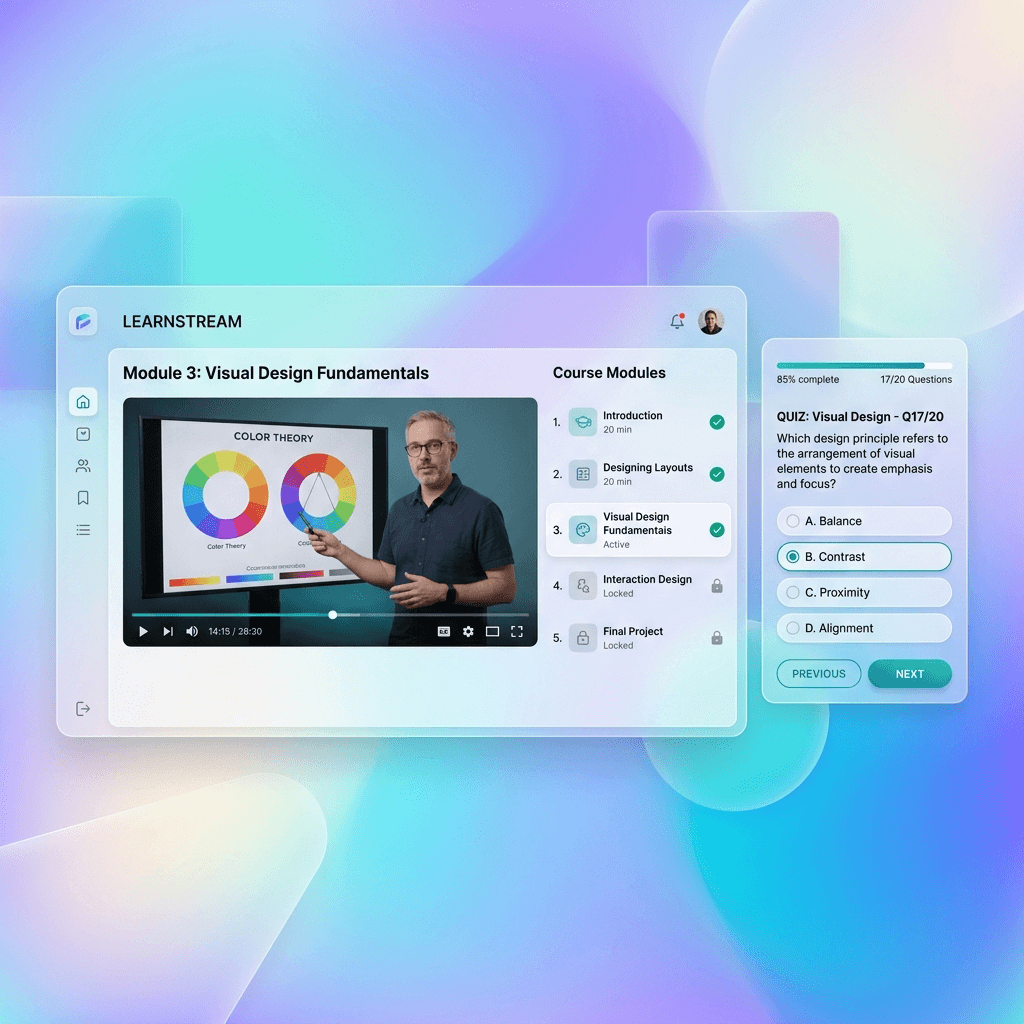
You know your subject cold. You've taught it in a classroom, over Zoom, or to a WhatsApp group that keeps growing. The question isn't whether you can teach — it's how to turn that skill into a course people pay for, without losing half your income to a marketplace or drowning in tech you didn't sign up for.
This guide walks the whole road, India-first: how to validate what you'll teach, price it for Indian buyers, take payments over UPI and cards, stay clean on GST, and choose where to host it all. No fluff, no fake promises — just the steps that actually move you from idea to income.
Three ways to sell a course online (and the trade-offs)
Before the how, the where. In India you've got three broad routes, and the one you pick decides how much you keep and who owns the relationship with your students.
1. A marketplace (Udemy, Unacademy)
You list a course in a giant catalogue and tap into existing demand. The catch is steep: marketplaces commonly take a large share of each sale, set or discount your prices, and — crucially — keep the student's email. You're renting an audience, not building one. Great for a first experiment, rough for a real business.
2. Your own course platform
You get a branded academy — your name, your domain, your prices — and a checkout that pays straight into your bank. You drive the traffic, but you keep the revenue and, more importantly, the relationship. This is what most serious Indian educators graduate to, and it's the route this guide assumes from here on.
3. A do-it-yourself stack
WordPress plus an LMS plugin, a payment plugin, an email tool, a video host, a community app. Total control, but you're now a part-time sysadmin maintaining five subscriptions that don't quite talk to each other. Fine if you enjoy plumbing; a tax on your time if you don't.
Step 1 — Validate what you'll teach before you record anything
The most expensive mistake is recording 40 lessons nobody asked for. Validate first. Pick a transformation, not a topic: "clear the SSC CGL quant section in 60 days" beats "a maths course." Buyers pay for outcomes.
- Write the one-line promise: who it's for and what they'll be able to do after.
- Find where these people already gather — a Telegram group, a college WhatsApp, an Instagram comment section — and ask what they're stuck on.
- Pre-sell. Offer a small live cohort or an early-bird price before the full course exists. Money upfront is the only validation that counts.
- Only then record, shaping lessons around the exact questions people asked.
Pre-selling beats polishing
Ten people paying ₹999 for a live batch tells you more than a hundred people saying "looks great." Run the first cohort live, record it, and your evergreen course is half-built already.
Step 2 — Outline, then record (without fancy gear)
Structure first. Group your promise into 4–8 modules, each with a handful of short lessons. Short wins: a 7-minute lesson that gets watched beats a 40-minute one that gets abandoned. Add a quiz or a worksheet every module so learning sticks and completion rates climb.
On gear, stop overthinking. A recent phone, a ₹1,500 collar mic, and a window for light will out-perform an expensive camera in a dark room. Screen-record slides for theory; show your face for the bits that need trust. You can always re-shoot a weak lesson later — done beats perfect.
- Hook each lesson in the first 15 seconds — say what they'll get.
- One idea per lesson. If a lesson needs a second title, split it.
- End with a tiny action: a practice question, a checklist, a thing to try.
- Mark one or two lessons as a free preview so buyers can sample your teaching before paying.
Step 3 — Price it for the Indian market
Indian buyers aren't cheap; they're value-sensitive. They'll happily pay for a clear outcome and proof it works, but they'll bounce off a vague, overpriced "masterclass." Anchor your price to the result, not the runtime.
| Model | Typical India range | Best for |
|---|---|---|
| Self-paced course | ₹499 – ₹4,999 | Skills with a clear, repeatable outcome |
| Live cohort / batch | ₹2,000 – ₹25,000 | Exam prep, coaching, accountability |
| Membership / subscription | ₹199 – ₹1,500 / month | Ongoing practice, communities, doubt-solving |
| 1:1 or small-group mentoring | ₹1,000 – ₹10,000 / session | High-touch, premium transformations |
Two pricing moves that work especially well here: an early-bird price with a real deadline (urgency that's honest, because the price genuinely rises), and tiers — a self-paced version, a live version, and a premium mentoring version of the same promise. For more on this, see cohort-based learning explained once you're ready to add a live tier.
Step 4 — Choose a platform that keeps your money
Here's where a lot of Indian educators get quietly bled. International platforms often price in dollars, add per-transaction fees on lower plans, and route payments through gateways that don't love Indian cards or UPI. The result: you earn in rupees but pay in dollars, and a chunk of every sale leaks away.
Run any platform through this checklist:
- Commission: Does it take a cut of every sale, on top of the gateway fee? On volume, that's the difference between a hobby and a business.
- Payments: Native UPI, Indian cards, net-banking, and direct payouts to an Indian bank — or a clunky international processor?
- Pricing currency: Billed in INR, or in USD that swings with the exchange rate?
- GST invoicing: Can it generate GST-compliant invoices for your students?
- Your brand: A custom domain and a white-label academy, or someone else's logo on your hard work?
- Everything in one place: Courses, live classes, payments, a community, and certificates — or five tools you have to stitch together?
The commission math
Sell ₹5,00,000 of courses in a year. A platform taking a 10% commission quietly pockets ₹50,000 — every year, forever. A zero-commission platform leaves that in your account. Read the deep-dive: zero-commission course platforms in India.
This is the gap The Big Class was built to close — an India-first platform with 0% commission on your storefront, native Razorpay + UPI, INR pricing, GST invoicing, and your own white-label academy on a custom domain. You bring the teaching; it handles the rest.
Step 5 — Set up payments (UPI, Razorpay, GST)
Payments are where Indian educators feel the most friction with foreign tools, and where the right setup feels effortless. The cleanest path: connect your own Razorpay account so students can pay by UPI, card, or net-banking, and the money settles directly into your bank — usually within a couple of working days.
A few India-specific things to get right:
- UPI is non-negotiable. It's how most Indians pay online. If checkout doesn't offer UPI, you'll lose sales at the last step.
- GST: If you cross the registration threshold, you'll need to charge and invoice GST correctly. Pick a platform with built-in GST invoicing so this isn't a spreadsheet nightmare.
- The gateway fee is separate from commission. Razorpay charges its own small percentage to process the payment — that's unavoidable on any platform. What you can avoid is an *extra* platform commission stacked on top.
Step 6 — Build the page that actually sells
Your sales page does the convincing while you sleep. It doesn't need to be clever; it needs to be clear. Lead with the outcome, show proof, remove doubt, then ask for the sale.
- A headline that states the transformation, not the topic.
- Who it's for (and honestly, who it's not for).
- The curriculum, with one or two free preview lessons unlocked.
- Proof: testimonials, results, a wall of student wins.
- Clear pricing with an early-bird or tier choice.
- An FAQ that kills the top three objections.
- One obvious button — buy now, pay by UPI.
Social proof punches above its weight in India, where buyers trust other learners far more than marketing copy. A Wall of Love of real student results answers the silent question every buyer has: "did this actually work for someone like me?"
Step 7 — Launch and get your first students
You don't need a huge audience to start — you need the right hundred people. Launch to the warm circle first, then widen.
- Tell your existing audience first — your WhatsApp groups, Telegram, Instagram, past students. They already trust you.
- Run a free live workshop as a taster, then offer the course at the end with an early-bird deadline.
- Turn students into a channel. A simple refer-and-earn link lets happy learners bring friends, and you can track exactly who drove each sale.
- Send across every channel. Class reminders and offers land far better when they go out over in-app, email, and WhatsApp together — not one lonely email that gets buried.
Step 8 — Retain and scale (where the real money is)
Selling a course once is a transaction. Building a business means students finish, get results, tell friends, and come back for the next thing. Three levers do most of the work:
- Community. A community around your course lifts completion and retention more than any clever email sequence. Learners who feel seen, stay.
- Live + cohorts. Adding a live tier — recurring classes with accountability — commands higher prices and dramatically better outcomes.
- Certificates. A verifiable certificate at the finish line gives learners something to show off, which doubles as free marketing for you.
Stack these and a single ₹2,999 course becomes a ladder: a free workshop, a self-paced course, a live cohort, a membership. Same expertise, several income streams.
Common mistakes to avoid
- Recording the whole course before selling a single seat.
- Pricing on runtime ("50 hours!") instead of outcome.
- Choosing a platform that takes a commission you'll feel for years.
- Forgetting UPI at checkout and wondering why carts get abandoned.
- Treating the launch as the finish line instead of the starting line.
Your quick-start checklist
- Write your one-line promise and pre-sell a small cohort.
- Outline 4–8 modules; record short, focused lessons.
- Price to the outcome; add an early-bird and tiers.
- Pick an India-first, zero-commission platform with UPI + GST.
- Connect Razorpay; turn on UPI and direct payouts.
- Build a clear sales page with free previews and proof.
- Launch to your warm audience; add refer-and-earn.
- Layer community, live cohorts, and certificates to scale.
Start selling — and keep what you earn
Spin up a free, India-first academy with 0% storefront commission, native UPI + Razorpay, GST invoicing and your own custom domain. Build your first course and take your first payment today.
Start free
Renu Rawat
Founder of thebigclass.com. Helping Indian educators and creators build profitable, independent learning businesses without losing 30% to platform fees.
About the founderFrequently asked questions
- What is the best platform to sell courses online in India?
- The best platform for most Indian educators is one built India-first: native UPI and Razorpay payments, pricing in INR, GST invoicing, a custom-domain white-label academy, and — critically — no commission on your sales. Marketplaces like Udemy bring traffic but take a large cut and keep your students' contact details, while many international platforms charge per-transaction fees and bill in USD. The Big Class is designed specifically for this gap, with 0% storefront commission.
- How much does it cost to start selling courses online in India?
- You can start for free. On a free-forever plan you can build a course, open a storefront, and take payments — your main cost is the payment gateway's standard processing fee (Razorpay's percentage per transaction), which every platform pays. You only move to a paid plan when you want extras like a custom domain or higher limits.
- How do I accept payments for my online course in India?
- Connect your own Razorpay account so students can pay by UPI, debit/credit card, or net-banking, with the money settling directly into your bank account — usually within a couple of working days. UPI is essential, since it's how most Indians pay online. The platform should also generate GST-compliant invoices automatically.
- Do I need GST to sell online courses in India?
- It depends on your turnover and the nature of your sales. Once you cross the GST registration threshold, you generally need to register, charge GST, and issue compliant invoices. Choosing a platform with built-in GST invoicing makes this routine rather than a monthly headache. For your exact obligations, check with a CA.
- Can I sell courses without paying a commission?
- Yes. Some platforms charge zero platform commission, so you keep 100% of every sale minus only the unavoidable payment-gateway fee. Over a year of sales the difference is substantial — a 10% commission on ₹5,00,000 of sales is ₹50,000 you'd otherwise lose. See our full guide on zero-commission course platforms.
- How long does it take to create and launch a course?
- Faster than you think if you pre-sell. Many educators run a small live cohort first — recording it as they teach — and have an evergreen, self-paced course within a few weeks. The fastest route is: validate and pre-sell, teach it live once, then package the recordings.
- Self-paced or live cohort — which sells better in India?
- Both, for different buyers. Self-paced courses scale and suit clear, repeatable skills. Live cohorts command higher prices and produce better outcomes thanks to accountability and community — which is why exam-prep and coaching lean live. The smart move is to offer both as tiers of the same promise.
- How do I get my first course sales with a small audience?
- You don't need a big audience — you need the right warm one and a reason to act now. Launch to people who already trust you (past students, WhatsApp and Telegram groups, your Instagram), run a free live workshop and invite attendees into the course with an early-bird deadline, and turn early buyers into referrers with a refer-and-earn link. Publishing real student results as proof answers the silent question every buyer has. The first hundred right people matter far more than thousands of passive followers.
Keep reading
Zero-Commission Course Platforms: Keep 100% of Your Course Revenue
Commission is the quiet tax on every sale you make. Here's what it really costs over a year, how to spot a true zero-commission platform, and how to keep what you earn.
Read
How to Start an Online Coaching Business in India (2026)
From your first paying client to a business that doesn't depend on your calendar — models, tools, pricing, getting students, and scaling your coaching without burning out.
Read
Cohort-Based Learning, Explained — and When It Beats Self-Paced
Self-paced courses get finished by a tiny fraction of buyers. Cohorts — same start date, live, together — flip that. Here's how they work and when to run one.
Read