Online Course Completion Rates: How to Measure and Improve Them
Completion rate is the metric most creators never measure — and the one that quietly decides reviews, refunds and referrals. Here's what's good, how to measure it, and how to lift it.

Most creators obsess over sales and never look at completion — yet completion is what actually produces the results, reviews and referrals that drive the next sales. A course nobody finishes is a refund waiting to happen and a testimonial that never arrives. The good news is that completion is measurable and improvable: it isn't luck or willpower, it's the product of a few design choices you control.
This guide is the practical playbook for the completion-rate metric specifically: what a good rate looks like, how to measure it properly, and which levers move it most — ranked by impact. (For the deeper 'why students drop off' psychology, pair this with our guide to student retention; here we focus on the number and how to raise it.)
What is a course completion rate?
Your completion rate is simply the share of enrolled learners who finish the course: completions ÷ enrolments, as a percentage. Decide upfront what 'finish' means for you — watching the last lesson, passing a final quiz, submitting a final project — and measure consistently against that definition. The definition matters: 'reached the last lesson' and 'passed the final assessment' can give very different numbers, so be clear and stick to it.
What's a good completion rate?
Brace yourself: the honest benchmarks are low for self-paced courses, which is exactly why this metric matters. Free self-paced courses often complete in the single digits to mid-teens; paid self-paced courses do better (people value what they pay for); adding community lifts it further; and live cohorts — with their deadlines and accountability — complete at dramatically higher rates.
Don't be discouraged by low self-paced numbers — be motivated by the gap. The difference between a 15% and a 70% completion rate isn't better videos; it's the structure, community and accountability around them. Those are choices, and this guide is about making them.
Why completion rate matters to your business
Completion isn't a vanity metric — it's upstream of almost everything that grows a course business. Learners who finish get results; learners who get results leave reviews, refer friends, and buy your next thing. Learners who quit refund, stay silent, and churn. A higher completion rate quietly improves your testimonials, your word-of-mouth, your repeat sales and your refund rate all at once — which is why it deserves as much attention as your conversion rate.
How to measure completion properly
You can't improve what you don't track, and a single headline number hides the story. Measure completion, then segment it to find where to act.
- Overall completion rate — your headline number, tracked over time, not once.
- Drop-off points — the specific lessons where learners stop. These tell you exactly what to fix or shorten.
- Activation — the share who start within the first few days (your onboarding's report card).
- Time-to-complete — how long finishers take, which tells you if your pacing is realistic.
- Segment by cohort or batch — so you can see whether a change actually moved the number.
The drop-off points are gold. If 60% of learners quit at the same lesson, that lesson is too long, too hard, or unclear — a precise, fixable problem rather than a vague 'people don't finish.' Measurement turns retention from a mystery into a to-do list.
The improvement playbook (ranked by impact)
Not all levers are equal. Here they are roughly in order of how much they move completion, so you spend effort where it pays.
1. Community (biggest lever)
Isolation is the main reason learners quit, so a community is the single biggest completion lever — learners who can ask doubts, see others' progress and celebrate wins keep going when solo learners stop. If you add one thing, add this.
2. Cohorts and deadlines
A shared schedule and real deadlines are why cohort courses complete at far higher rates. Even in self-paced courses, add structure: weekly drip, target dates, and a suggested pace beat an open-ended 'whenever.'
3. Onboarding (the first week)
Completion is often decided in the first few days. Welcome learners personally, engineer an early win in the first lesson, make the next step obvious, and get them into the community immediately. A great first week builds the momentum that carries through the hard middle.
4. Live touchpoints
Even occasional live sessions act as commitment devices and unblock stuck learners in real time — turning the walls that would end a course into steps learners climb.
5. Visible progress and quizzes
Progress bars, completed-lesson ticks, streaks and a quiz after each module make forward motion feel good, so the next lesson is easier to start than skip. Gentle gamification (points, a leaderboard) helps too.
6. A finish line and nudges
A certificate or final project gives learners something to reach for, and automated nudges across in-app, email and WhatsApp rescue drifters before they're gone. Both are low-effort, high-return.
Quick wins vs structural changes
Some levers you can switch on this week; others reshape the course. Do the quick wins first, then invest in the structural ones.
| Quick wins (this week) | Structural (next version) |
|---|---|
| Turn on progress bars + a certificate | Add a community space |
| Set up nudge emails/WhatsApp | Move from self-paced to a cohort |
| Shorten the worst drop-off lesson | Add weekly live sessions |
| Improve the first lesson (early win) | Redesign onboarding flow |
Did it work? Measuring your changes
Treat completion like a dial you turn, not a hope you hold. After each change — a new community, a deadline, a better onboarding email — compare completion and weekly-active numbers for the next cohort against the last. If the drop-off at a specific lesson disappears after you shortened it, you've proven the fix. This feedback loop is what steadily turns a 15% course into a 50%+ one, change by change.
Self-paced vs cohort completion
If completion is your priority, format is your biggest single decision. Self-paced maximises reach and convenience but completes poorly without strong supporting levers; cohorts complete far better because accountability and community are built into the format. The best of both: offer a self-paced tier wrapped in a community and nudges, and a cohort tier for those who want the structure — and steer learners who need accountability toward the cohort.
Why paid courses complete better than free ones
One of the most reliable patterns in online education is that people finish what they pay for. A free course costs nothing to abandon, so it's abandoned freely — there's no sunk cost, no commitment, no consequence to quitting. A paid course, even a modestly priced one, carries a psychological weight: the learner has invested, so they're motivated to get their money's worth. This is why free courses languish in single-digit completion while paid ones do meaningfully better.
The practical lesson isn't 'never offer anything free' — free workshops and intro lessons are great top-of-funnel tools. It's that if completion (and therefore results, reviews and referrals) matters to you, charging even a small amount changes behaviour. And it compounds with the other levers: a paid course wrapped in a community, with deadlines and a finish line, completes far better than a free, solo, open-ended one. Price is itself a retention lever — see how much to charge.
Common completion mistakes
- Never measuring completion at all, so you can't improve it.
- Responding to low completion by adding more content (the problem is rarely content).
- No community, leaving learners isolated by default.
- No deadlines or structure in self-paced courses.
- Ignoring the specific lessons where learners drop off.
- No finish line or nudges to pull drifters back.
Your completion-improvement checklist
- Define 'complete' and measure your baseline rate.
- Find your drop-off points and fix the worst lessons.
- Add a community — the biggest single lever.
- Add deadlines/structure, or move to a cohort.
- Nail onboarding for a strong first week.
- Add progress bars, quizzes, a certificate and nudges.
- Re-measure each cohort to confirm changes work.
Build courses people finish
Community, live sessions, quizzes, certificates and multi-channel nudges — the whole completion toolkit in one India-first platform, with 0% commission. Start free.
Start free
Renu Rawat
Founder of thebigclass.com. Helping Indian educators and creators build profitable, independent learning businesses without losing 30% to platform fees.
About the founderFrequently asked questions
- What is a good online course completion rate?
- It depends heavily on format. Free self-paced courses often complete in the single digits to mid-teens, paid self-paced do better (people value what they pay for), adding a community lifts it further, and live cohorts complete at dramatically higher rates — often 70%+ — thanks to deadlines and accountability. Don't be discouraged by low self-paced numbers; the gap between 15% and 70% isn't better videos, it's the structure, community and accountability around them, all of which you control.
- How do I calculate my course completion rate?
- Divide the number of learners who finished by the number who enrolled, as a percentage (completions ÷ enrolments × 100). First decide what 'finish' means for you — reaching the last lesson, passing a final quiz, or submitting a final project — and measure consistently against that definition, since 'reached the last lesson' and 'passed the assessment' can give very different numbers. Track it over time and segment by cohort to see whether changes move it.
- Why are online course completion rates so low?
- Mostly because solo, self-paced learning works against human nature: learners are isolated (nobody notices if they stop), have no deadlines ('whenever' becomes never), get stuck with no one to ask, lose momentum in the middle, and see no visible progress. These are environment and accountability problems, not content problems — which is why community, deadlines, live touchpoints and a finish line lift completion far more than adding more lessons does.
- What's the single best way to improve course completion?
- Add a community. Isolation is the main reason learners quit, so a community where they can ask doubts, see others' progress and celebrate wins is the biggest single lever — it changes the experience from 'me alone with videos' to 'us doing this together.' It's also why cohort courses, which are communities by design, complete at far higher rates than solo self-paced ones. If you do one thing for completion, build a community.
- Do cohorts have higher completion rates than self-paced courses?
- Yes, substantially. Cohorts build in the two strongest completion levers — community and shared deadlines — by design: everyone starts together, moves on a schedule, and has a group experiencing it with them. That accountability and belonging is why cohorts often complete at 70%+ while self-paced courses without supporting levers languish in the teens. If completion is your priority, a cohort (or at least a strong community around self-paced content) is the highest-leverage choice.
- How do I find where students drop off in my course?
- Track completion lesson by lesson and look for the points where a large share of learners stop — most platforms with progress tracking show this. Those drop-off points are precise, fixable problems: a lesson where 60% quit is likely too long, too hard, or unclear. Shorten it, clarify it, or add support there, then re-measure. This turns 'people don't finish' from a vague worry into a specific to-do list.
- Does adding more content improve completion?
- No — and it often makes things worse. Low completion is rarely a content problem; it's an environment and accountability problem. Piling on more lessons makes the course longer and more daunting, deepening drop-off. Instead, add community, deadlines, strong onboarding, live touchpoints, visible progress and a finish line — the levers that address why learners actually quit. Fix the structure around the content, not the amount of content.
- How do I measure whether my completion changes are working?
- Treat completion as a dial and run a before-and-after. Compare the completion rate and weekly-active numbers of the cohort after a change against the one before it, and watch specific drop-off points — if the drop at a lesson disappears after you shortened it, you've proven the fix. Change one major thing at a time where you can, so you know what moved the number, and keep a running record cohort to cohort.
- Do paid courses have higher completion rates than free ones?
- Yes, reliably. People finish what they pay for — a free course costs nothing to abandon, so it's abandoned freely, while even a modestly priced course carries a psychological weight that motivates learners to get their money's worth. This is why free courses often languish in single-digit completion while paid ones do meaningfully better. The lesson isn't to never offer anything free (free workshops are great top-of-funnel tools) but that, if completion matters, charging even a small amount changes behaviour — and it compounds with community, deadlines and a finish line.
- How long does it take to improve a course's completion rate?
- You can see movement within a cohort or two. Quick wins like progress bars, a certificate, nudge messages and shortening the worst drop-off lesson can lift completion almost immediately, while structural changes like adding a community or moving to a cohort show their full effect over the next intake. The key is to change something, measure the next group against the last, and keep iterating — completion is a dial you turn steadily, not a switch you flip once.
Keep reading

How to Improve Student Retention in Online Courses
Completion is the metric nobody brags about — because most courses have terrible numbers. Here's why students quit, and the levers that actually get them to the finish line.
Read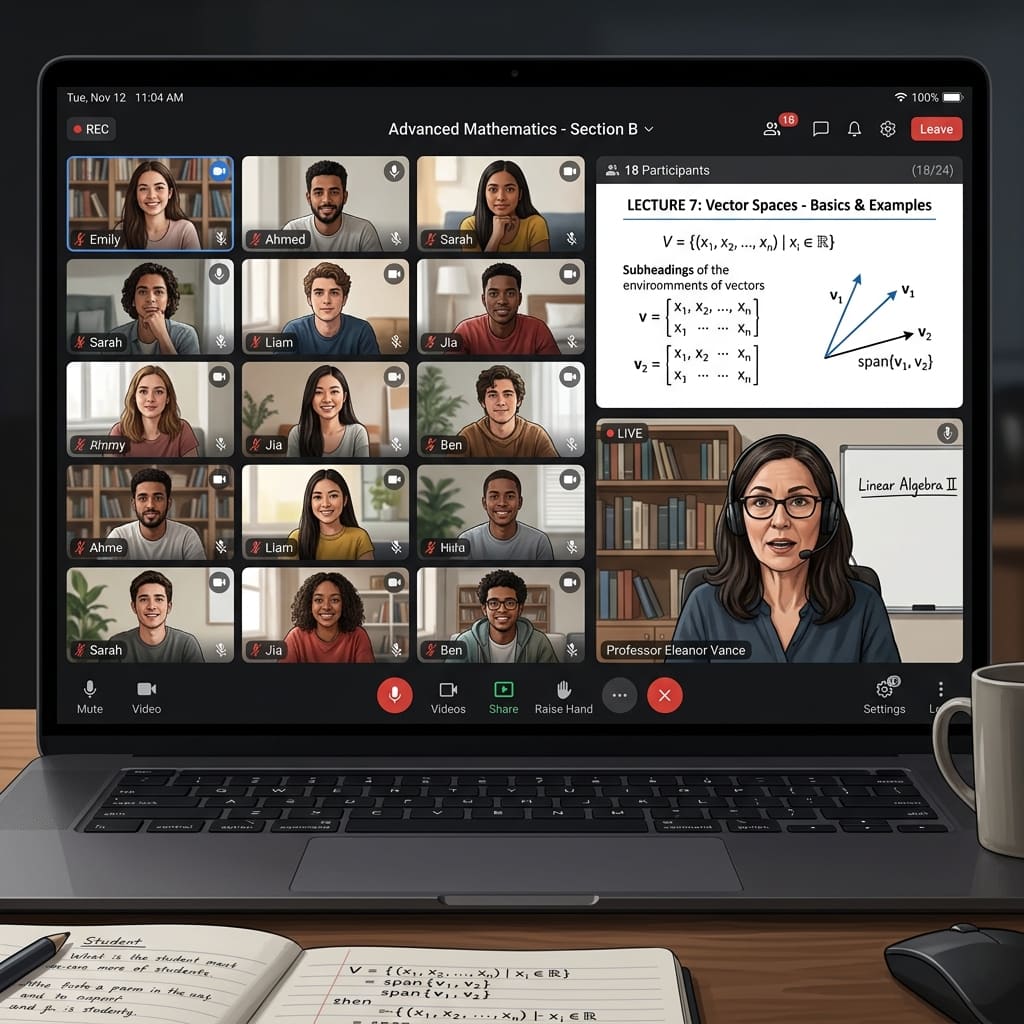
How to Build a Community Around Your Online Course (2026)
The lonely learner quits. The one who feels part of something finishes, gets results and brings a friend. Here's how to build the community that makes that happen.
Read
Cohort-Based Learning, Explained — and When It Beats Self-Paced
Self-paced courses get finished by a tiny fraction of buyers. Cohorts — same start date, live, together — flip that. Here's how they work and when to run one.
Read