Cohort-Based Learning, Explained — and When It Beats Self-Paced
Self-paced courses get finished by a tiny fraction of buyers. Cohorts — same start date, live, together — flip that. Here's how they work and when to run one.
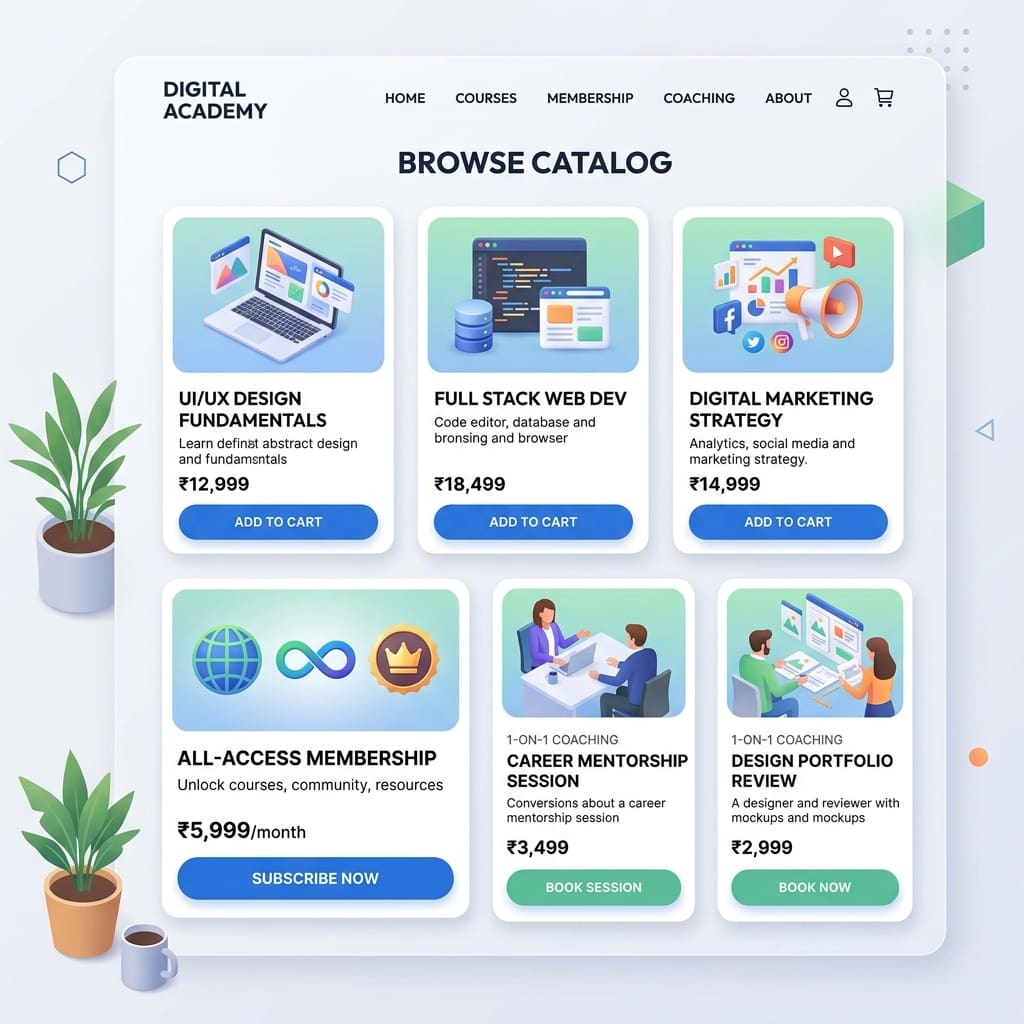
Here's an uncomfortable truth about online courses: most people who buy one never finish it. They mean to. Life happens. The course sits in a tab, then a guilt-pile, then nowhere. Self-paced learning asks the buyer to supply all the discipline — and most of us, honestly, can't.
Cohort-based learning fixes that by changing one thing: you don't learn alone, and you don't learn whenever. You start on a date, with a group, on a schedule, with a teacher who's actually there. That single shift — from solo-and-someday to together-and-now — is why cohorts finish at rates self-paced courses can only dream of. Let's unpack what they are, why they work, and how to run one in India.
What is cohort-based learning?
Cohort-based learning (CBL) is a course where a group of learners starts together on a fixed date and moves through the material at the same pace, with live sessions, deadlines, and interaction along the way. Think of it as the difference between watching recorded gym videos alone and joining a 6am batch with a trainer and ten others. Same exercises — wildly different odds you actually show up.
The defining ingredients are a shared start date, a fixed schedule, live touchpoints, and a group that experiences it together. Strip those out and you're back to self-paced. Keep them, and you've built accountability into the format itself.
Cohort vs self-paced: the honest comparison
Neither is "better" in the abstract — they serve different goals and different buyers. Here's the trade-off laid bare.
| Self-paced | Cohort-based | |
|---|---|---|
| Completion rates | Typically very low | Dramatically higher |
| Price you can charge | Low–medium | Medium–high |
| Scales to | Unlimited learners | A batch at a time |
| Your time per run | Near zero after recording | Live hours each cohort |
| Accountability | All on the learner | Built into the format |
| Outcomes | Variable | Stronger, more consistent |
| Best for | Foundational, repeatable skills | Transformations, exam prep, coaching |
The smartest educators don't pick one. They offer both as tiers of the same promise: a self-paced version for the self-driven, and a live cohort for those who want accountability and access. See how that ladder works in how to sell courses online in India.
Why cohorts get better outcomes
It isn't magic, and it isn't better video. Three forces do the work.
Accountability
A deadline you share with others is a deadline you keep. When a live session is on the calendar and your pod is expecting you, "I'll do it later" loses its grip. The format supplies the discipline the learner couldn't.
Community
Learning with others beats learning alone. Questions get answered by peers, wins get celebrated, and the simple feeling of not being the only one struggling keeps people going. A community around the cohort is the engine room of retention.
Live energy
A live class is a commitment device and a momentum machine. Real-time Q&A, the teacher reacting to where the group is stuck, the small social pressure of showing up — none of it survives in a folder of recordings. That energy is most of what learners are paying the premium for.
When cohorts win — and when self-paced is smarter
Run a cohort when the outcome is a real transformation that benefits from accountability and feedback: exam prep, a skill with projects, coaching, anything where finishing matters more than convenience. Cohorts also justify higher prices, so they're the better economics for premium programs.
Choose self-paced when the material is foundational and repeatable, when your audience genuinely needs flexibility (working professionals across time zones), or when you want something that scales to thousands without more of your hours. Often the answer is "both" — a self-paced base that feeds a premium cohort.
How to design your first cohort
A cohort is a calendar wrapped around your content. Design that calendar deliberately.
- Pick a length. Four to eight weeks is the sweet spot — long enough to transform, short enough to finish.
- Set a rhythm. One or two live sessions a week, at a fixed time that suits your audience (evenings/weekends for working Indians).
- Build in deadlines. An assignment or milestone each week makes progress visible and keeps the pace honest.
- Add peer interaction. Pods, a community channel, or partner check-ins turn isolated learners into a group.
- End with a showcase. A final project, demo day, or certificate gives everyone a finish line to cross together.
Teach it live first
Don't pre-build everything. Run the first cohort live, recording as you go — you'll shape it around real questions, and you'll have an evergreen self-paced course at the end almost for free.
Pricing a cohort in India
Cohorts justify a premium because they sell a result with access and accountability, not just content. In India that typically lands well above a self-paced course of the same subject — think multiples, not a few hundred rupees more. Anchor the price to the transformation and the live access, and offer EMI on higher-ticket cohorts so the monthly number feels easy. The full payments picture is in accepting payments for online courses in India.
Tools you need to run a cohort
You don't need a pile of apps — you need a few jobs done well, ideally together so they actually connect.
- Live classes with recordings and a fixed schedule — the spine of the cohort.
- Multi-channel reminders (in-app, email, WhatsApp) so people actually show up.
- A community space for doubts, wins and peer pods.
- Assignments and quizzes to make progress visible.
- Certificates for the finish line — motivation plus free marketing.
On the tooling itself: the live call usually runs on Zoom or Google Meet, and you'll see cohort-specific platforms like Disco and Ruzuku built around the model internationally, plus Thinkific and Teachable for the course side. The catch for Indian creators is that most of these are card-first and charge in dollars — so you stitch several tools together and pay an FX premium. An all-in-one, India-first platform keeps live classes, reminders, community, quizzes and certificates connected — with native UPI and 0% storefront commission — so you spend your time teaching, not integrating. See how to start an online coaching business for the wider operating picture.
Measuring whether your cohort worked
Don't guess — watch a few honest numbers each run. Completion rate tells you if the format is holding. Live attendance tells you if your schedule and reminders work. Outcomes (did they pass, ship, improve?) tell you if the teaching delivered. And a simple post-cohort rating plus testimonials tells you if they'd recommend it — your next cohort's marketing, written by this one.
Cohort-based learning in India: real examples
CBL isn't a Silicon Valley import that doesn't translate — it's already how a lot of effective Indian teaching works, just with a new name. Think of the coaching institute that runs a fixed test-series batch for UPSC aspirants: same start, same schedule, weekly tests, doubt sessions, a peer group grinding together. That's a cohort. The format has powered Indian exam prep for decades; online CBL simply brings its accountability to subjects beyond the classroom.
A few shapes that work especially well here. Spoken-English batches thrive as cohorts because language needs live practice and a safe group to fumble in front of — you can't get fluent from recordings alone. Coding and data programs run as cohorts because projects need feedback and deadlines, and a peer pod keeps beginners from quietly giving up at the first error. Even fitness, music and finance creators run weekly live batches with a community, because showing up together is the whole point. If your subject benefits from practice, feedback or accountability — and most do — it suits a cohort.
The pattern across all of them is the same: take the expertise you already have, wrap it in a calendar with live touchpoints and a group, and watch completion and word-of-mouth climb. See the operating playbook in how to start an online coaching business.
Keeping the cohort alive between live sessions
Here's where many first-time cohorts stumble. The live class goes great — energy, questions, momentum — and then six days of silence until the next one, during which half the group drifts. The gap between sessions is where cohorts are won or lost, and filling it well is mostly about light, consistent touches rather than more content.
- A weekly assignment with a real deadline keeps hands on the work, not just eyes on the video.
- A community space where learners post progress, ask doubts and answer each other — peer answers often beat waiting for you.
- Peer pods of three or four, so accountability is personal and nobody feels lost in a crowd.
- Mid-week nudges across in-app, email and WhatsApp — a prompt, a reminder, a ‘how's it going?' — so the cohort stays top-of-mind.
- Visible progress, via a tracker or leaderboard, so people can see themselves moving and feel the pull to keep up.
Do this and the live sessions stop being isolated events and become the high points of a week the learner is engaged with throughout. That continuity is the difference between a cohort that finishes strong and one that limps to a half-empty final call. A built-in community is the single biggest help here — it turns the dead air between classes into the place the cohort actually lives.
How big should a cohort be?
There's no single right number, but there is a right way to think about it: a cohort should be big enough to feel alive and small enough that nobody feels invisible. A handful of people can feel flat, with too little energy to spark discussion. A few hundred can feel like a webinar, where individuals disappear and the live magic fades. The sweet spot for most educators sits comfortably in between — large enough for a buzzing community, small enough that you can still recognise names and answer most questions.
Two practical levers help you scale without losing intimacy. Peer pods break a big cohort into small accountability groups, so even a large batch feels personal. And co-instructors or teaching assistants let you grow numbers while keeping response times fast. Start smaller for your first cohort — it's easier to deliver a great experience to fewer people, and a glowing first batch is the marketing that fills your second. Grow the size as your systems and confidence grow, not before.
Remember that a bigger cohort isn't automatically more profitable once it costs you the very thing people paid for — access and accountability. Price and size should move together: a small, high-touch cohort can command a premium, while a larger one trades some intimacy for reach and a lower per-seat price. Pick the combination that fits the transformation you're promising.
Common mistakes
- Making it too long — momentum dies after eight weeks.
- No deadlines, so it quietly becomes self-paced with extra steps.
- Skipping community, leaving learners isolated between sessions.
- Under-pricing a cohort like it's a recording, ignoring the live value.
- Pre-building everything instead of teaching the first run live.
Launch your first cohort — checklist
- Define the transformation and who it's for.
- Set a 4–8 week calendar with weekly live sessions + deadlines.
- Pre-sell seats with a start date and an early-bird price.
- Set up live classes, reminders, a community space and certificates.
- Run it live, record everything, gather feedback.
- Package the recordings as a self-paced tier for the next launch.
Run a cohort that actually finishes
Live classes, multi-channel reminders, community and certificates in one India-first platform — with 0% storefront commission. Start your first cohort free.
Start free
Renu Rawat
Founder of thebigclass.com. Helping Indian educators and creators build profitable, independent learning businesses without losing 30% to platform fees.
About the founderFrequently asked questions
- What tools and platforms are best for running a live cohort-based course in India?
- A live cohort needs a few jobs done well: a video call (Zoom or Google Meet), a fixed schedule with the join link in one place, recordings, multi-channel reminders, a community for the days between sessions, and assignments or quizzes to make progress visible. International cohort tools like Disco and Ruzuku — and course tools like Thinkific or Teachable — are built around this model but are card-first and priced in dollars. For Indian creators, an all-in-one India-first platform like The Big Class ties live classes, recordings, WhatsApp/email/in-app reminders, community, quizzes and certificates together — with native UPI and 0% storefront commission — so you spend your time teaching instead of stitching tools together.
- What is cohort-based learning?
- Cohort-based learning is a course where a group of learners starts together on a fixed date and moves through the material at the same pace, with live sessions, deadlines and interaction along the way. The shared start, fixed schedule, live touchpoints and group experience build accountability into the format — which is why cohorts finish at far higher rates than self-paced courses.
- Is cohort-based learning better than self-paced?
- Neither is universally better — they serve different goals. Cohorts deliver much higher completion and stronger outcomes and command higher prices, but cost you live hours and scale a batch at a time. Self-paced scales to unlimited learners with almost no ongoing time, but finishes rarely. Many educators offer both as tiers of the same course.
- How long should a cohort be?
- Four to eight weeks is the sweet spot for most subjects — long enough for a real transformation, short enough that momentum and motivation hold. Beyond about eight weeks, attendance and completion tend to drop. Pair the length with a weekly rhythm of one or two live sessions and a deadline each week.
- How do cohort-based courses work for educators?
- You set a start date and a fixed schedule, run live sessions (with recordings for catch-up), set weekly assignments or milestones, give learners a community space and peer pods, and end with a showcase or certificate. A common approach is to teach the first cohort live — recording as you go — then reuse those recordings to create a self-paced version.
- How much should I charge for a cohort in India?
- Cohorts justify a premium over self-paced because they sell a result with live access and accountability, not just content — typically a multiple of a comparable self-paced course. Anchor the price to the transformation and the live access, and offer EMI on higher-ticket cohorts so the monthly figure feels manageable to Indian buyers.
- What tools do I need to run a cohort?
- A few connected jobs: live classes with recordings and a fixed schedule, multi-channel reminders (in-app, email, WhatsApp) so learners show up, a community space for doubts and peer pods, assignments and quizzes to make progress visible, and certificates for the finish line. An all-in-one platform keeps these linked so you teach instead of stitching tools together.
- Why do cohorts have higher completion rates?
- Three forces: accountability (shared deadlines and a group expecting you), community (learning with others beats learning alone), and live energy (real-time sessions are commitment devices and momentum machines). Self-paced courses ask the learner to supply all the discipline; cohorts build it into the format.
- Can I offer both a cohort and a self-paced version?
- Yes, and it's the smart move. Sell a self-paced version for self-driven learners and a premium live cohort for those who want accountability and access — tiers of the same promise. Teaching the cohort live and packaging the recordings gives you the self-paced tier almost for free.
- How many students should be in a cohort?
- Big enough to feel alive, small enough that nobody feels invisible — for most educators that's a middle ground between a flat handful and a faceless few hundred. Start smaller for your first cohort, since a great experience for fewer people produces the testimonials that fill your next one. To scale without losing intimacy, use peer pods to break a large batch into small accountability groups, and add co-instructors or TAs to keep response times fast. Match size to price: smaller, high-touch cohorts command a premium; larger ones trade intimacy for reach.
Keep reading
How to Start an Online Coaching Business in India (2026)
From your first paying client to a business that doesn't depend on your calendar — models, tools, pricing, getting students, and scaling your coaching without burning out.
Read
How to Build a Community Around Your Online Course (2026)
The lonely learner quits. The one who feels part of something finishes, gets results and brings a friend. Here's how to build the community that makes that happen.
Read
How to Sell Courses Online in India: The Complete 2026 Guide
From a blank page to your first paying student — validating the idea, pricing it right, taking UPI payments, handling GST, and picking a platform that doesn't eat your margin.
Read