How to Create an Online Course in India: A Step-by-Step Guide
From a blank page to a course people finish — validating the idea, structuring it well, recording on an Indian budget, and adding the quizzes and certificates that make it stick.
Most first-time course creators do it backwards. They disappear for three months, record forty hours of video, launch to silence, and conclude that "online courses don't work." The course was fine. The order was wrong. Creating a course people actually buy and finish is less about recording and more about structure, validation, and a few small decisions that make learning stick.
This is the build guide — the how-to-make-it half. (For the how-to-sell-it half, see how to sell courses online in India.) We'll go from a blank page to a finished, sellable course: validating the idea, shaping a curriculum, recording without fancy gear, and adding the quizzes, resources and certificate that turn passive viewers into people who get a result.
Step 0 — Validate before you build anything
The single most expensive mistake is building first and checking demand later. Flip it. Before you record a thing, prove people want this exact course, from you, at a price. The cheapest validation is a conversation; the strongest is money upfront.
- Write a one-line promise: who it's for and what they'll be able to do after.
- Ask your audience — a WhatsApp group, Instagram followers, past students — what they're stuck on, in their words.
- Pre-sell a small live cohort or an early-bird slot before the full course exists. Ten people paying beats a hundred saying "looks great."
- Shape the course around the exact questions people asked — not the syllabus in your head.
Teach it live first
Run the first version as a live batch, recording as you go. You'll build the course around real questions and walk away with both income and a ready-made self-paced course. More on this in cohort-based learning.
Step 1 — Pick a transformation, not a topic
People don't buy "a Python course." They buy "land your first developer job in six months" or "automate your boring office reports." A topic is a subject; a transformation is a before-and-after the buyer can feel. Name the start state and the end state, and your course suddenly has a spine — and a reason to be bought.
Write it as one sentence: "By the end, you'll be able to ___." If you can't fill that blank crisply, your course will wander and so will your students. Everything that follows — the modules, the lessons, the quizzes — should serve that single promise. Cut anything that doesn't.
Step 2 — Structure the curriculum
A great course is a staircase, not a pile. Group your promise into 4–8 modules, each a meaningful step toward the outcome, and break each module into short lessons that do one thing well.
- Modules = milestones. Each should leave the learner able to do something new.
- Lessons = one idea each. If a lesson needs two titles, split it.
- Keep lessons short. A focused 7-minute lesson that gets watched beats a 40-minute one that gets abandoned.
- Sequence by dependency. Teach what's needed before it's needed; don't assume knowledge you haven't given.
Step 3 — Script (or at least plan) each lesson
You don't need a word-for-word script, but you do need a plan, or you'll ramble and re-record. For each lesson, jot the one idea, the hook (the first 15 seconds that says what they'll get), the example you'll use, and the tiny action you'll end on. That skeleton keeps lessons tight and makes recording far faster.
Examples are where teaching lives. An abstract rule is forgettable; the same rule shown on a real, relatable example sticks. For Indian learners, use Indian examples — rupees, local scenarios, names they recognise — so the lesson feels written for them, not translated at them.
Step 4 — Record without fancy gear
Stop waiting for the perfect setup. The gap between a phone and a DSLR matters far less than light and sound. A recent phone, a ₹1,000–₹1,500 collar mic, and a window for soft daylight will out-perform an expensive camera in a dark, echoey room every time.
- Sound first. Bad audio loses learners faster than bad video. A cheap collar mic is the best money you'll spend.
- Light from the front. Face a window or a lamp; never sit with a bright window behind you.
- Screen-record theory, show your face for trust. Slides or a screen for the how; your face for the why and the welcome.
- Record in short takes. One lesson at a time. A fumble means re-recording two minutes, not two hours.
- Done beats perfect. Ship it, see what learners ask, and re-record weak lessons later.
Step 5 — Add the things that make learning stick
Video alone is passive, and passive learners don't finish. The difference between a course people watch and a course people complete is the active bits — the checks, the practice, the resources that turn watching into doing.
- Quizzes after each module to check understanding and give a small sense of progress. See quizzes & assessments.
- Worksheets and downloads so learners apply the idea, not just absorb it.
- A free preview lesson or two, so buyers can sample your teaching before paying.
- Drip or open? Drip content (releasing modules on a schedule) suits cohorts and pacing; open-all suits self-paced. Pick deliberately.
- **A certificate at the end** — a finish line that motivates learners and doubles as your marketing when they share it.
Step 6 — Put it on a platform
Now your course needs a home. This is where it becomes a real, sellable thing — hosted, priced, and ready to take payments. You want a platform that hosts video, structures modules and lessons, runs quizzes, issues certificates, and — crucially for India — takes UPI payments with money settling to your bank.
On The Big Class you can build the course with drag-and-drop modules, set free previews, add quizzes and certificates, and open a storefront with native UPI and 0% commission — all in one place, so you're not stitching a video host to a payment plugin to an email tool. For choosing among options, see the best online course platform in India.
Step 7 — Price it (and don't undersell)
Price to the transformation, not the runtime. "50 hours of video" is a feature; "clear your exam" is a result, and results command real prices. Anchor to the outcome, offer an early-bird with a genuine deadline, and consider tiers — a self-paced version and a premium live version of the same promise. The full playbook is in course pricing strategy for Indian educators.
Step 8 — Build a simple sales page and launch
Your sales page doesn't need to be clever; it needs to be clear. Lead with the transformation, show who it's for, reveal the curriculum with a free preview unlocked, stack proof (testimonials, results, a wall of student wins), state the price, answer the top three objections, and give one obvious button to buy by UPI. Then launch to your warm audience first — past students and your existing followers — before widening.
Build for how India actually learns: mobile and language
Two design choices quietly decide whether your course reaches its audience. The first is mobile. The overwhelming majority of Indian learners study on a phone, often on mobile data in a tier-2 or tier-3 town — so your lessons need to look good vertically, your text needs to be readable on a small screen, and your videos shouldn't demand a fibre connection to load. Test every lesson on an actual phone before you launch; what looks fine on your laptop can be unusable in someone's hand on the bus.
The second is language. You don't have to teach in English to be taken seriously — often the opposite. A course taught in Hindi, Tamil, Telugu or a blend of English and the local language can reach learners who'd bounce off a purely English one, and it signals that the course was built for them, not translated at them. Even within an English course, use Indian examples, rupees and familiar scenarios. Meeting learners in their language and on their device isn't a compromise on quality — it's how you make a genuinely great course actually land.
Common mistakes to avoid
- Recording everything before selling a single seat.
- Building around your syllabus instead of the learner's questions.
- Marathon lessons that get abandoned halfway.
- All video, no quizzes or practice — so nobody finishes.
- Obsessing over gear while the audio stays bad.
- Pricing on length instead of outcome.
Your course-creation checklist
- Validate and pre-sell before building.
- Define the one-sentence transformation.
- Outline 4–8 modules of short, single-idea lessons.
- Plan each lesson's hook, example and action.
- Record with good sound and front light; short takes.
- Add quizzes, worksheets, free previews and a certificate.
- Host on a platform with UPI + modules + certificates.
- Price to the outcome; build a clear sales page; launch warm.
Build your course in one place
Drag-and-drop modules, quizzes, certificates, free previews and a UPI storefront with 0% commission — everything you need to create and sell, on a free India-first platform.
Start free
Renu Rawat
Founder of thebigclass.com. Helping Indian educators and creators build profitable, independent learning businesses without losing 30% to platform fees.
About the founderFrequently asked questions
- How do I create an online course in India?
- Validate and pre-sell the idea first, then define a one-sentence transformation, structure it into 4–8 modules of short single-idea lessons, plan each lesson's hook and example, and record with good sound and front lighting (a phone and a cheap collar mic are plenty). Add quizzes, worksheets, free previews and a certificate to make it stick, host it on a platform that takes UPI payments, price it to the outcome, and launch to your warm audience first.
- What equipment do I need to record an online course?
- Far less than you think. A recent smartphone, an inexpensive collar (lavalier) mic, and natural light from a window will out-perform an expensive camera in a dark, echoey room. Sound matters more than video — bad audio loses learners fastest — so spend on the mic first. Screen-record for theory and show your face for the parts that build trust.
- How long should an online course be?
- Long enough to deliver the transformation, no longer. Keep individual lessons short — around 5–10 minutes, one idea each — because focused short lessons get watched while marathon ones get abandoned. Total length should be driven by the outcome you promised, not by hitting an hours target; nobody buys a course for its runtime.
- Should I make a self-paced course or a live cohort?
- Both serve different buyers. Self-paced scales and suits clear, repeatable material; live cohorts produce far higher completion and command higher prices thanks to accountability and community. A smart approach is to teach the first cohort live, record it, and reuse the recordings as a self-paced tier — giving you both from one effort.
- How do I make sure students actually finish my course?
- Build in the active elements that beat passivity: short lessons, a quiz or worksheet each module, a free preview to start strong, and a certificate as a finish line. Even better, add a community and live touchpoints — learners who feel part of a group and have deadlines finish far more often than those watching videos alone.
- Do I need to validate my course idea before building it?
- Yes — it's the step that prevents the most heartbreak. Talk to your audience about what they're stuck on, then pre-sell a small cohort or early-bird slot before recording everything. Money upfront is the only validation that truly counts, and it lets you build the course around real questions instead of guesses.
- Where should I host my online course in India?
- Choose a platform that hosts video, structures modules and lessons, runs quizzes, issues certificates, and — essential for India — takes UPI payments with money settling directly to your bank. An all-in-one platform like The Big Class covers all of this with native UPI and 0% storefront commission, so you avoid stitching a video host, payment plugin and email tool together.
- How much does it cost to create an online course?
- You can create one for very little. The main costs are a decent mic (₹1,000–₹1,500), your time, and a course platform — many of which, including The Big Class, have a free plan to start, so your only running cost is the payment gateway's standard fee when you make a sale. You don't need expensive cameras or software to make a course that sells.
- How do I price my online course?
- Price to the transformation, not the runtime. Anchor the price to the result your learner gets, use an early-bird offer with a real deadline, and consider tiers (a self-paced version and a premium live version). For a full breakdown of models and India-specific pricing, see our course pricing strategy guide.
- Should I teach my course in English or a regional language?
- Teach in whatever language your audience is most comfortable learning in — often that's Hindi, a regional language, or a natural blend with English, not pure English. A course in the learner's language can reach people who'd bounce off an English-only one, and it signals the course was built for them rather than translated at them. Even within an English course, use Indian examples, rupees and familiar scenarios. Meeting learners in their language isn't a compromise on quality; it's how a great course actually lands with its audience.
- How do I keep my course content updated?
- Treat your course as a living product, not a one-time recording. Watch which lessons confuse people (community questions and drop-off points tell you), and re-record or add a clarifying lesson where needed — you don't redo everything, just the weak spots. Refresh anything time-sensitive (prices, tools, rules) when it changes, and version meaningful updates so existing students know there's something new. A course that quietly improves over time earns better reviews and justifies steady price rises.
Keep reading
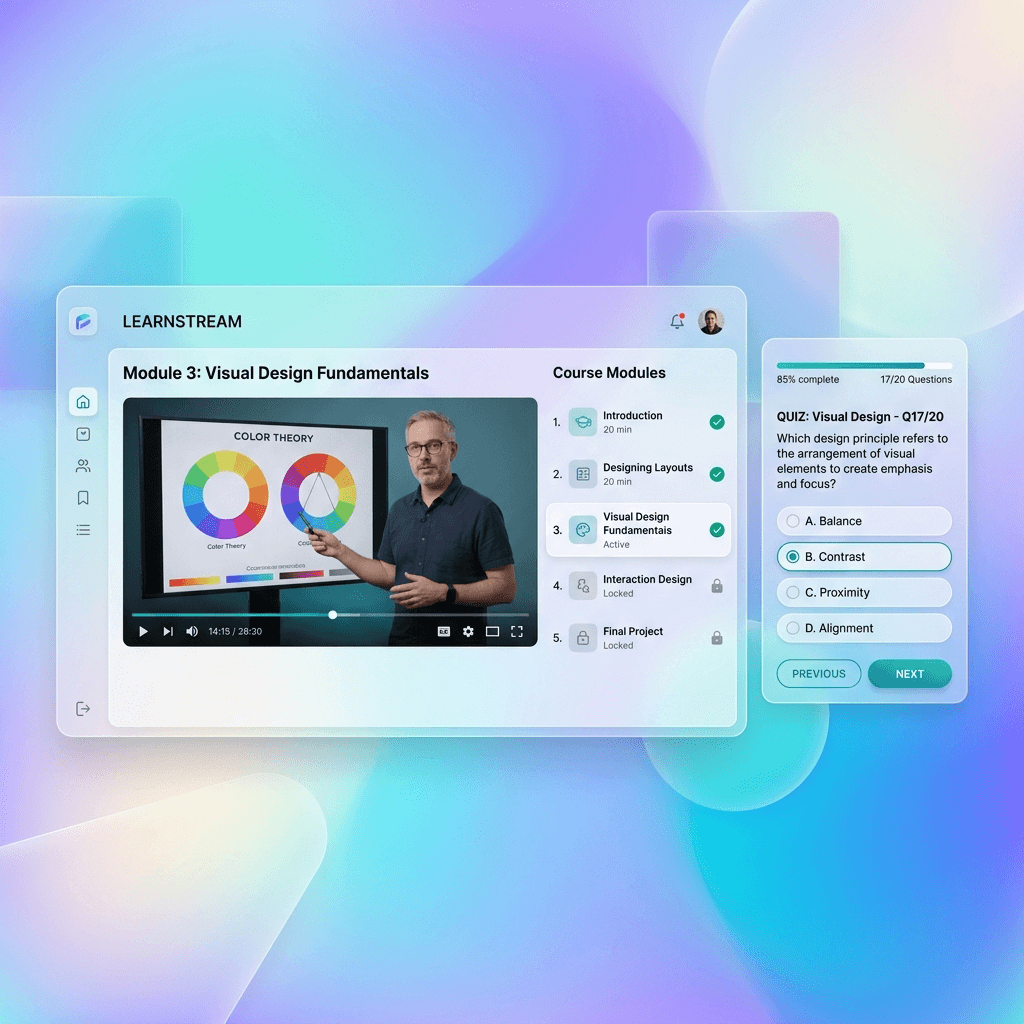
How to Sell Courses Online in India: The Complete 2026 Guide
From a blank page to your first paying student — validating the idea, pricing it right, taking UPI payments, handling GST, and picking a platform that doesn't eat your margin.
Read
How to Price Your Online Course in India
Indian buyers aren't cheap — they're value-sensitive. Price to the result, not the runtime, and use tiers, anchoring and EMI to sell more without a race to the bottom.
Read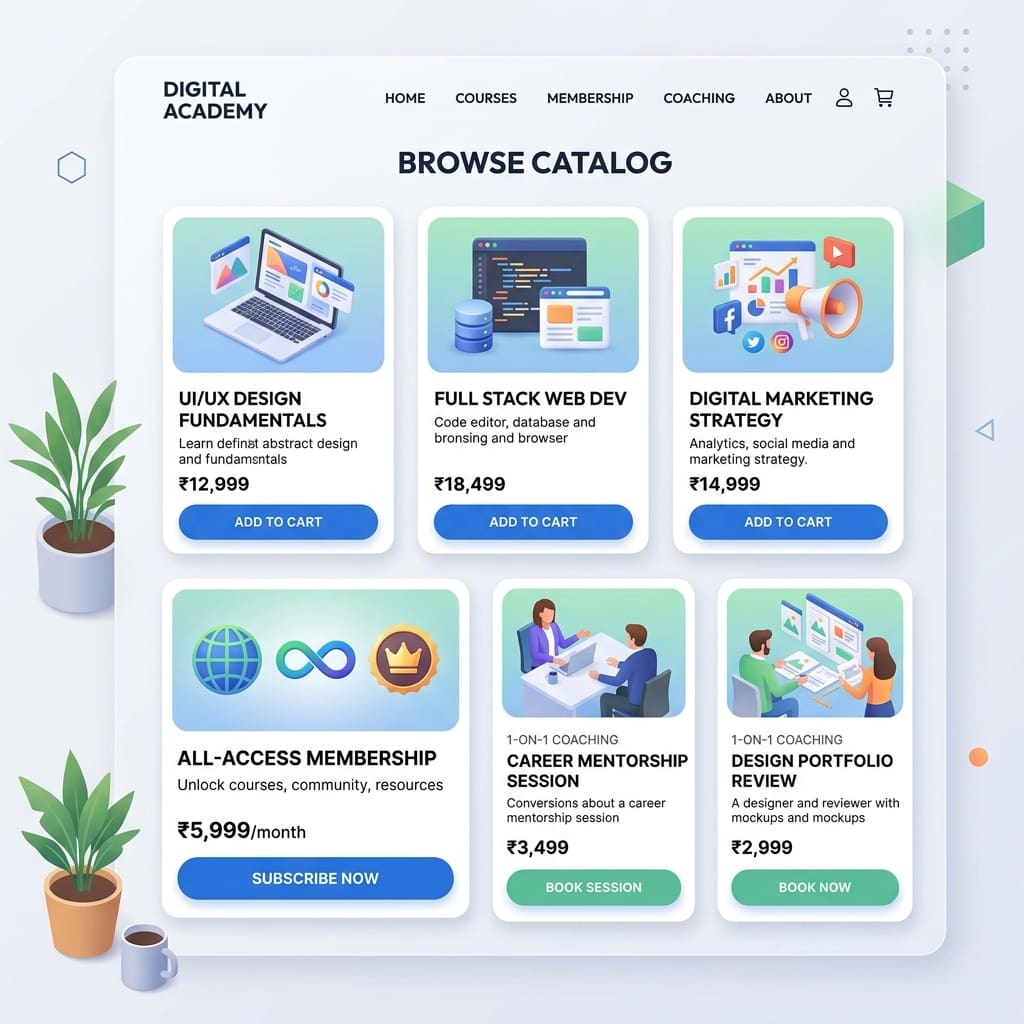
Cohort-Based Learning, Explained — and When It Beats Self-Paced
Self-paced courses get finished by a tiny fraction of buyers. Cohorts — same start date, live, together — flip that. Here's how they work and when to run one.
Read